Canine Personalized mRNA Immunotherapy — IIT Study in China
A frontier personalized immunotherapy tailored to each dog — IIT study recruiting at 12 partner hospitals in 9 cities
When standard options are limited, personalized mRNA immunotherapy offers a frontier alternative for dogs with cancer: turn each dog's tumor features into a "wanted poster" and teach the immune system to find the real enemy.
Start with one dog's story
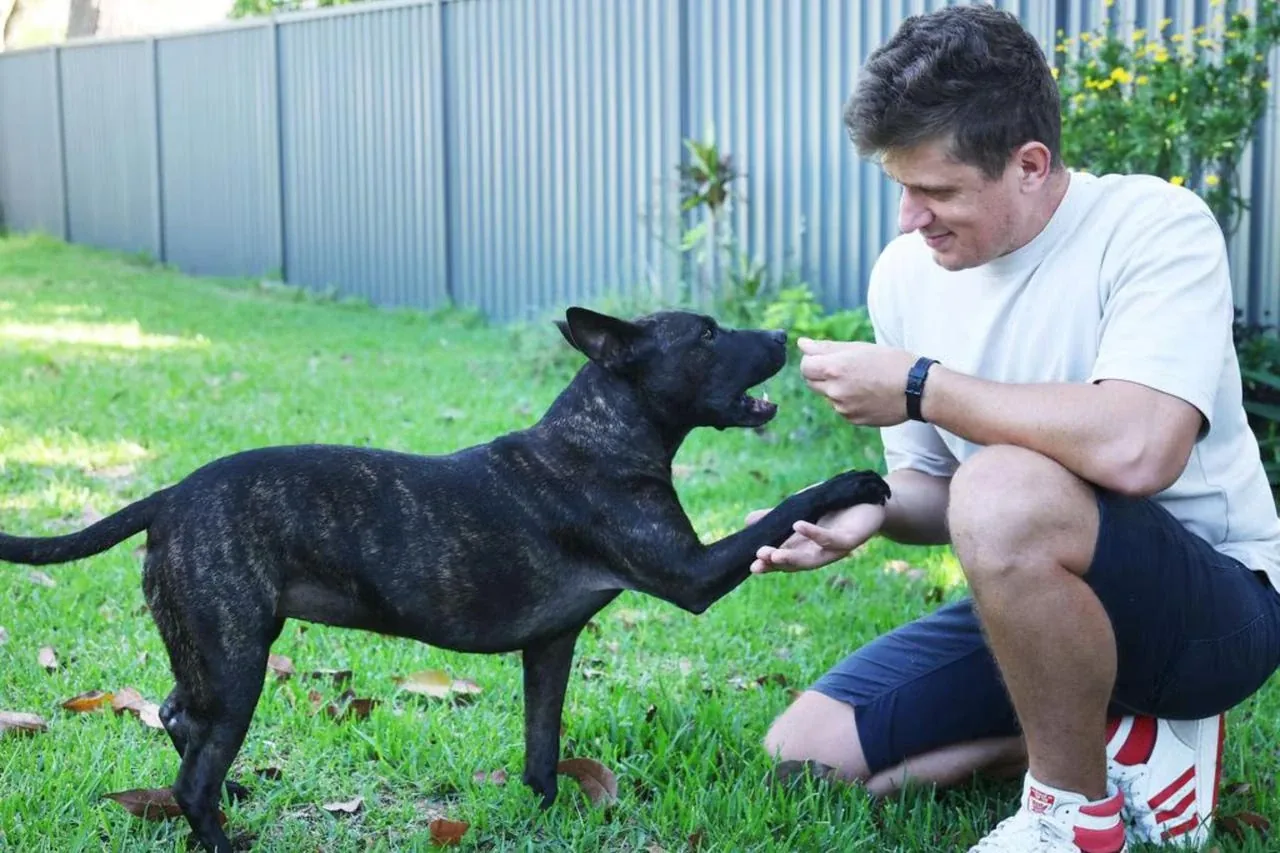
Paul Conyngham with Rosie (Photo: John Feder)
In late 2025, a dog named Rosie in Australia showed the world where personalized mRNA treatment can lead. Rosie had mast cell tumor; surgery and chemotherapy had failed to stop it — so her owner, with AI assistance and a research team at the University of New South Wales (UNSW), built a personalized mRNA vaccine for her. Within weeks, her tumors shrank by 50–75% and her mobility returned (per [UNSW Newsroom](https://www.unsw.edu.au/newsroom), March 17, 2026).
One dog's story proves a direction: reading each animal's tumor and tailoring treatment for it alone is real and achievable.
And this is exactly what PETcura is doing — turning the same technology into rigorous research and accessible services.

What this study does
RNA sequencing reads this dog's unique tumor features (neoantigens) and turns them into a "wanted poster" that belongs to this dog alone — after injection, the immune system learns to recognize and attack the real enemy.
- Personalized per dog: designed for one dog alone, no "population targets" needed
- Among the first in China: canine mRNA IIT recruiting at 12 hospitals in 9 cities
- Human-medicine platform: years of clinical research in human oncology behind it
Why this path (Why)
A new option when standard care is limited
When surgery, chemotherapy, or targeted therapy is limited or has failed, immunotherapy is a different route in the arsenal — it does not depend on "population targets" but on this dog's unique tumor features
Personalization is its essence
Dogs with the same cancer type can have very different tumor mutations. Each dog gets a vaccine designed for it alone — no other dog can use it, and none needs to
Mature platform, ready to translate
mRNA technology has years of clinical research in human oncology — the canine application rides on a mature platform, not a start from zero
Frontier and accessible in China
PETcura is recruiting this IIT at 12 partner hospitals in 9 cities — a frontier path accessible domestically
Same cancer. Different molecules.
Two "lymphomas" — or two "melanomas" — can be completely different diseases at the molecular level. Population therapies are designed for "most patients"; the starting point of personalized mRNA immunotherapy is: read this dog's tumor first, then build for it alone.
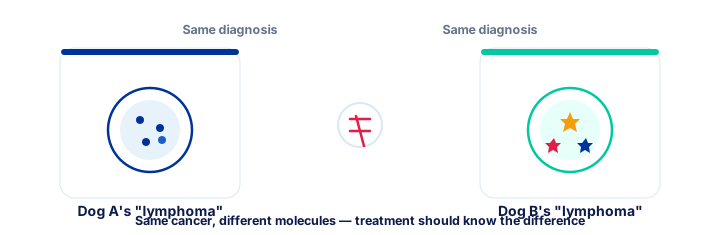
- The wanted poster must be drawn fresh: sequencing reveals this dog's unique tumor features (neoantigens); mRNA encodes them — the poster belongs to this dog only. No other dog can use it, and none needs to
- Treatment should know the difference: same diagnosis, different biology — personalization begins with reading the difference
- Personalization is not an option; it is the essence: this path does not rely on population targets — it targets "your dog's own typos"
Why mRNA, and why dogs first
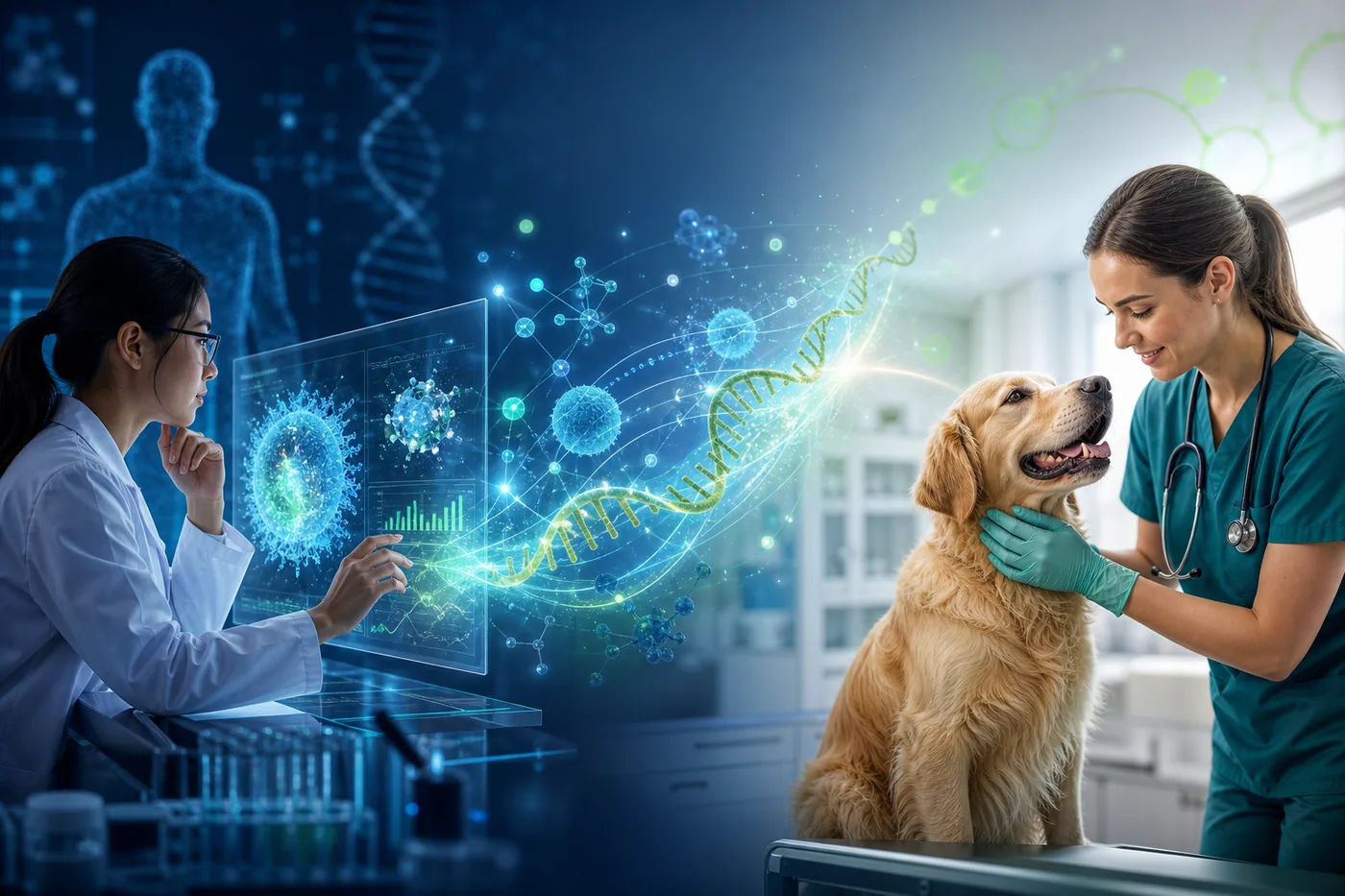
Shared biology, mature platform
Canine driver genes are highly homologous to the corresponding human cancer types, and mRNA vaccines have years of clinical research in human oncology (melanoma and others) — the canine application is customization on a mature platform, not starting from zero.
Fast disease, answers need to be fast
Canine tumors progress much faster than human ones — in the same time window, dogs need an effective answer sooner. From sequencing to finished formulation in ~7–9 weeks, mRNA is a path designed for "fast".
Canine precision medicine started late
The canine precision oncology toolkit is young, and when standard options are limited, an exploratory path holds more value. PETcura is among the first in China to run an IIT on personalized canine mRNA immunotherapy — more rigorous data is needed.
Key numbers
Data sources: PETcura IIT study protocol ([study details & eligibility](/en/mrna-vaccine/study/)); Rosie case data via [media coverage analysis](/en/mrna-vaccine/rosie/).
How it works
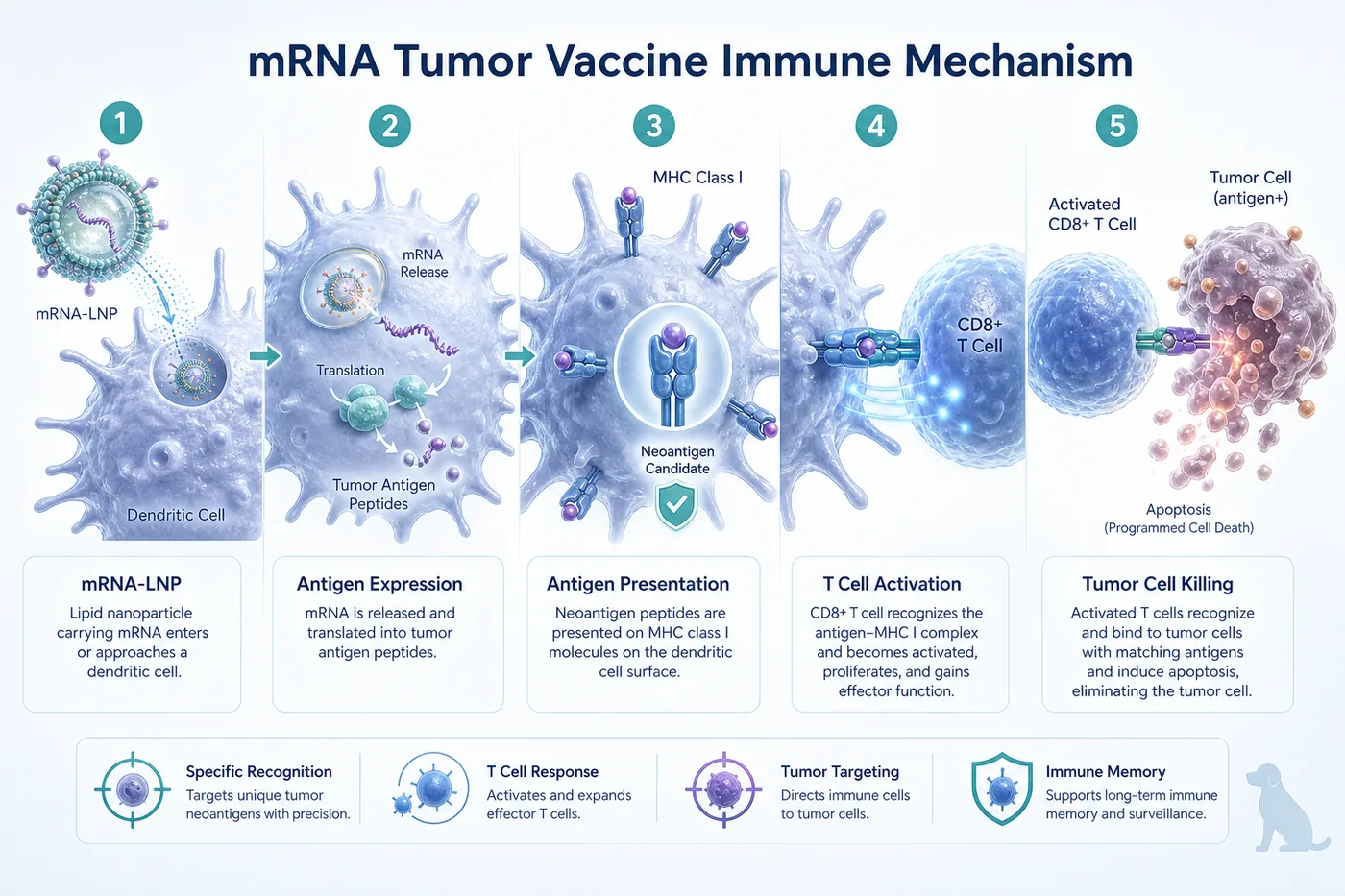
Tumors accumulate mutations that create protein fragments — neoantigens — absent from normal cells and recognizable by the immune system as "abnormal". Three steps of customization:
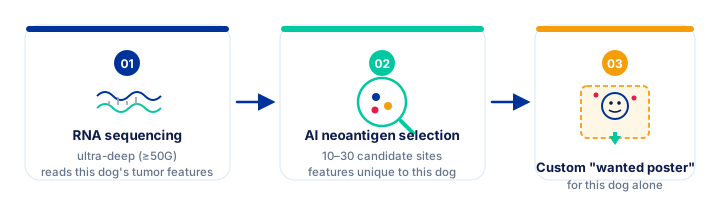
- RNA sequencing: ultra-deep RNA-seq (≥50G) of tumor tissue detects mutations, gene fusions, and alternative splicing
- AI neoantigen selection: 10–30 high-affinity candidate neoantigens selected by immunogenicity, mutation frequency, and expression
- Custom formulation: pseudouridine-modified mRNA encoding the selected antigens, packaged in lipid nanoparticles (LNP) — teaching the immune system to recognize this "wanted poster"
Timeline: sample on surgery day → sequencing and design (~3-4 weeks) → manufacturing (~4-5 weeks) → 8 doses (5 weekly priming + 14-day rest + 3 triweekly boosting, 12 weeks) → evaluation and follow-up. About 7–9 weeks from sampling to formulation.
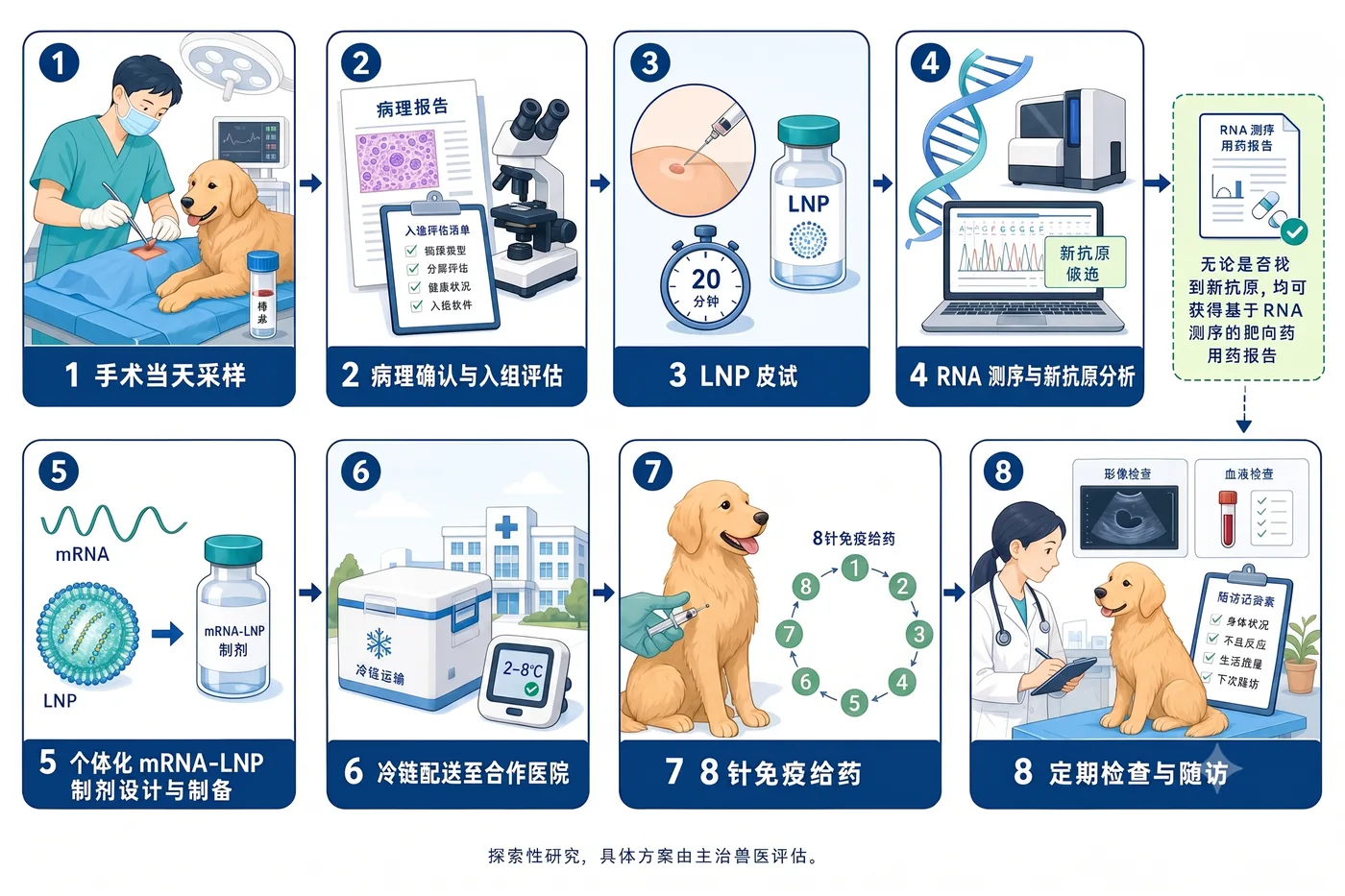
Safety design: an LNP intramuscular tolerance assessment is required before enrollment (1 hour in-clinic observation); blood work is monitored before every dose; clinics are equipped with emergency protocols; all adverse events are graded, managed, and reported.
Case study: after one dog
The full reading of Rosie's case — in late 2025, an Australian owner built a personalized mRNA vaccine for his mast cell tumor dog Rosie; the tumor shrank 50%–75% overall (per UNSW Newsroom, March 17, 2026). This is a single case with combination therapy and no control group — it does not represent universal efficacy — but it confirms the feasibility of the personalized mRNA immunotherapy direction.
Rosie's case was owner-initiated with AI-assisted design; PETcura runs a rigorous IIT led and assessed by licensed veterinarians: enrollment requires pathology confirmation, physical assessment, LNP tolerance evaluation, and informed consent, with monitoring and follow-up throughout. → Full analysis of the Rosie case
Two paths, one direction: Rosie's story did not stop at one dog — in 2026, Gamgee, founded on Rosie's story, raised investment including Y Combinator and became a company, now running formal clinical trials in Australia. PETcura walks the other path: personalized mRNA vaccines have years of clinical research in human oncology (melanoma and others), and we translate that mature human-medicine platform to dogs within a compliant framework. One path explores "upward" from a dog; the other translates "downward" from human medicine — two paths converging on the same conclusion: personalized mRNA immunotherapy is a direction the field is taking seriously.
How to participate: from application to treatment (4 steps)
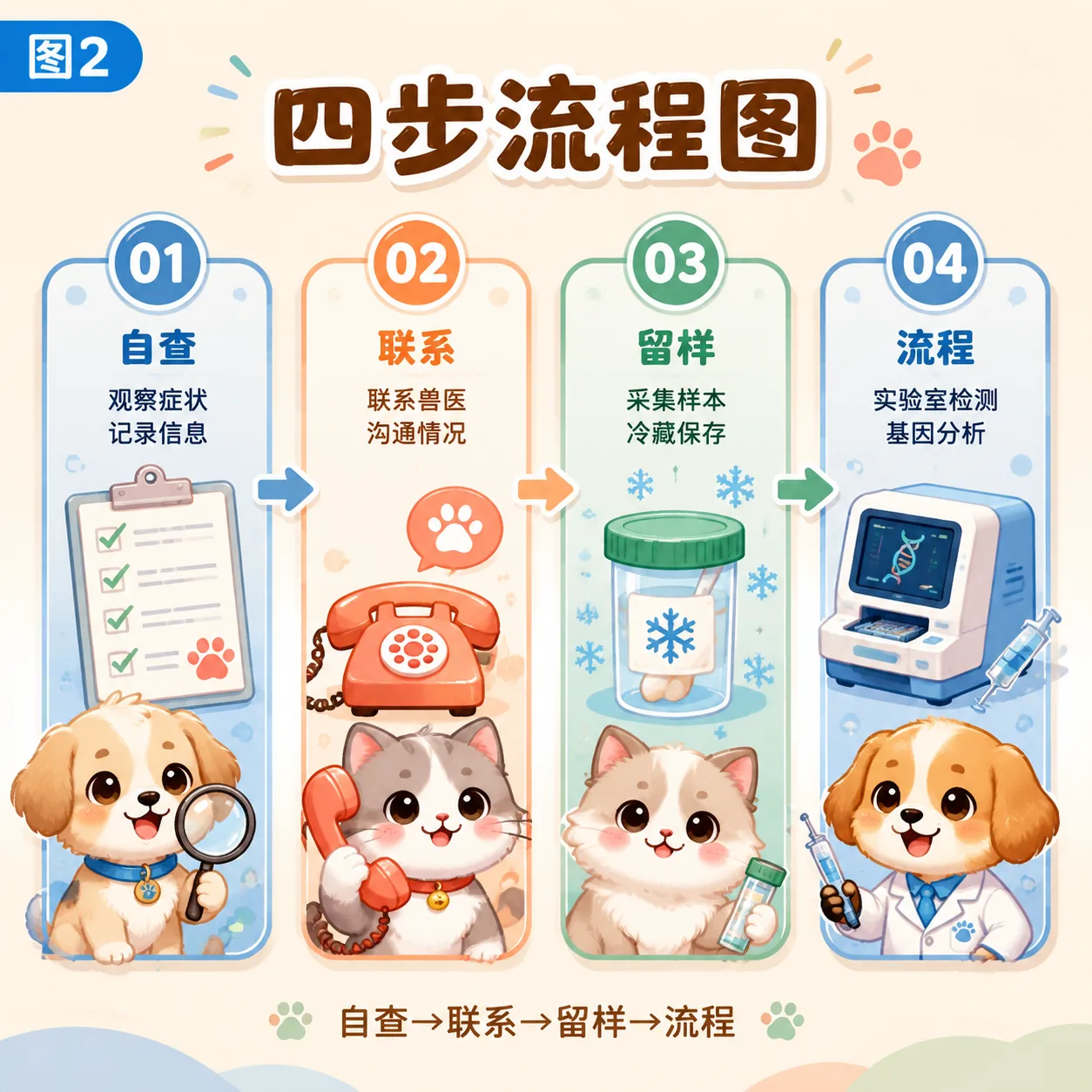
Self-check
Confirmed malignancy, surgery planned soon, adequate condition (T-cell lymphoma and brain tumors excluded)
Contact the team
Add us on WeChat petcura; share pathology/imaging and expected surgery date
Vet assessment + surgery-day sampling
Team matches a partner hospital; your veterinarian assesses; fresh tissue properly preserved on surgery day
Sequence → Build → Inject → Follow up
RNA-seq + neoantigen analysis → custom mRNA-LNP → 8 doses → ongoing follow-up
Full process and eligibility: Participating cities · Study details & eligibility
Want an enrollment assessment? Contact the PETcura team
Add us on WeChat petcura with pathology/imaging, expected surgery date, and your city — the team matches a partner hospital and your veterinarian assesses eligibility. Contact us before surgery: only proper surgery-day sampling opens this path.
Veterinarians: PETcura is a partner to veterinarians — from precise diagnosis and treatment guidance to frontier applications and joint research, we provide precision tools and options for doctors and hospitals. The mRNA IIT invites licensed veterinarians to join as co-investigators (three-stage collaboration, co-authorship on future publications). → Veterinarian partners page
FAQ
- Which dogs can enroll? What about cost? → Owner FAQ
- Why does surgery-day sampling matter? → Handbook: preserve the sample on surgery day
- How does it relate to PD-1, chemo, and targeted therapy? → Six treatment routes compared
Research nature
This is an investigator-initiated exploratory study (IIT) — not a commercially approved veterinary product. Enrollment and efficacy are not guaranteed. All participants are assessed by licensed veterinarians and sign informed consent. mRNA immunotherapy does not alter the dog's genome and does not replace standard treatment; it is an additional exploration built on the attending veterinarian's treatment plan.
Learn more: Study details & eligibility · Owner FAQ · Participating cities · Rosie case explained · Enrolled case updates