
PETcura · Precision Oncology for Pets
From "a mass you can see" to "a tumor you can read" — read it first, then treat it
Pet cancer care has evolved from surgery and radiation (treating visible masses) and chemotherapy (clearing uncontrolled cells) into a precision era driven by molecular testing: understand the tumor first, then choose the treatment. PETcura translates mature human-medicine precision oncology platforms to pets, so every treatment decision has evidence behind it.
Why precision medicine?
Time is the most expensive cost
Trial-and-error takes 1–2 months per regimen while the tumor keeps growing. Precision testing turns "trial" into "choice".
Same cancer type, different molecules
Same pathology, very different molecular features. Treatment decisions need molecular-level evidence, not just "treat by location".
Human-medicine platforms, translated
Sequencing, organoid drug testing, and mRNA immunotherapy are proven in human oncology. PETcura translates them to pets within a compliant framework.
Read first. Then treat.
Every dog's tumor is different — one sample, three paths in parallel, time kept for what works.
Preserve the sample
Properly preserve fresh tumor tissue — not a treatment decision today, but the right to choose tomorrow.
Molecular · ReadSequencing
Key-and-lock: read the tumor's mutations and find possible drug directions.
Cellular · TryDrug sensitivity
Avatar trials: 48 drugs tested on 3D organoids, a "treatment map" in ~10 days.
Immune · TeachmRNA
Wanted poster: teach the immune system to recognize this dog's unique tumor and clear it.
Time kept for what works
No blind trials, no delay, no giving up — every decision backed by evidence.
These are not three options — they are three ways of reading the same dog, from the same sample, in parallel.
Three precision routes
From the molecular level to the cellular level to the immune level — each answers a different question, and they complement each other.
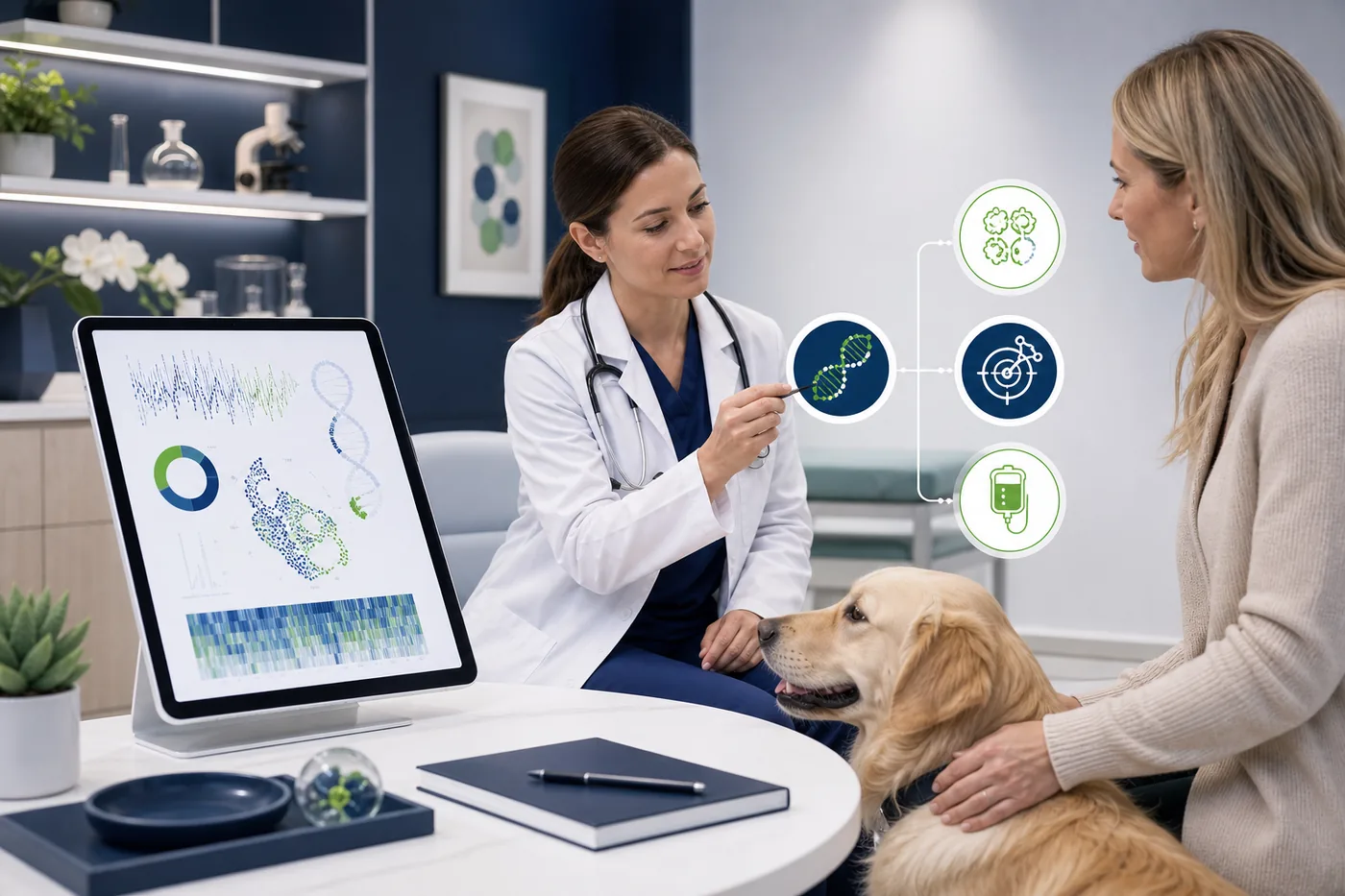 Molecular·Read · Coming Soon
Gene Sequencing & Targeted Drug Prediction
Answers: what drug directions exist
A 154-gene panel reads the tumor's mutations and amplifications, producing a targeted drug and treatment opportunity report. Paraffin blocks accepted.
Learn more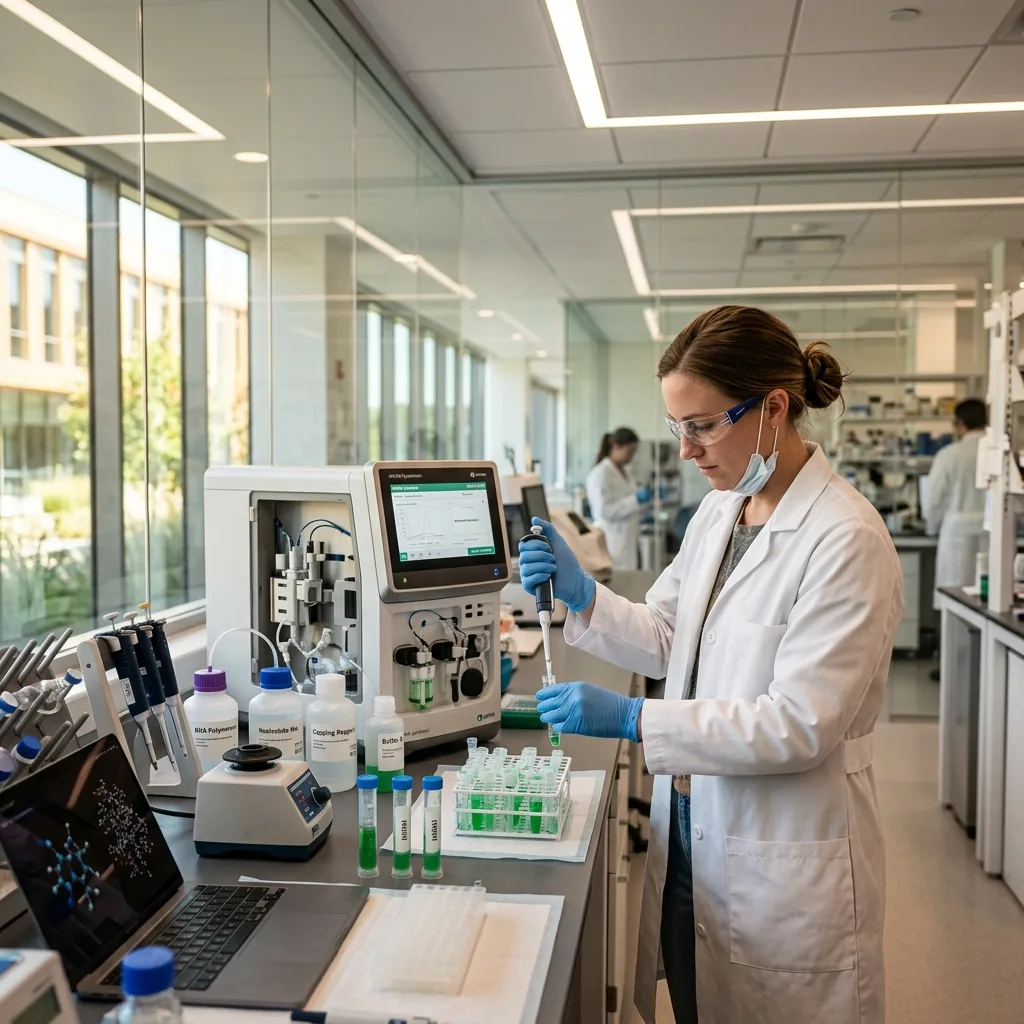 Cellular·Try · Available Now
Drug Sensitivity Testing
Answers: which drugs really work
3D organoid "avatars" test 48 drugs, report in ~10 days — so your pet never becomes a trial mouse.
Learn more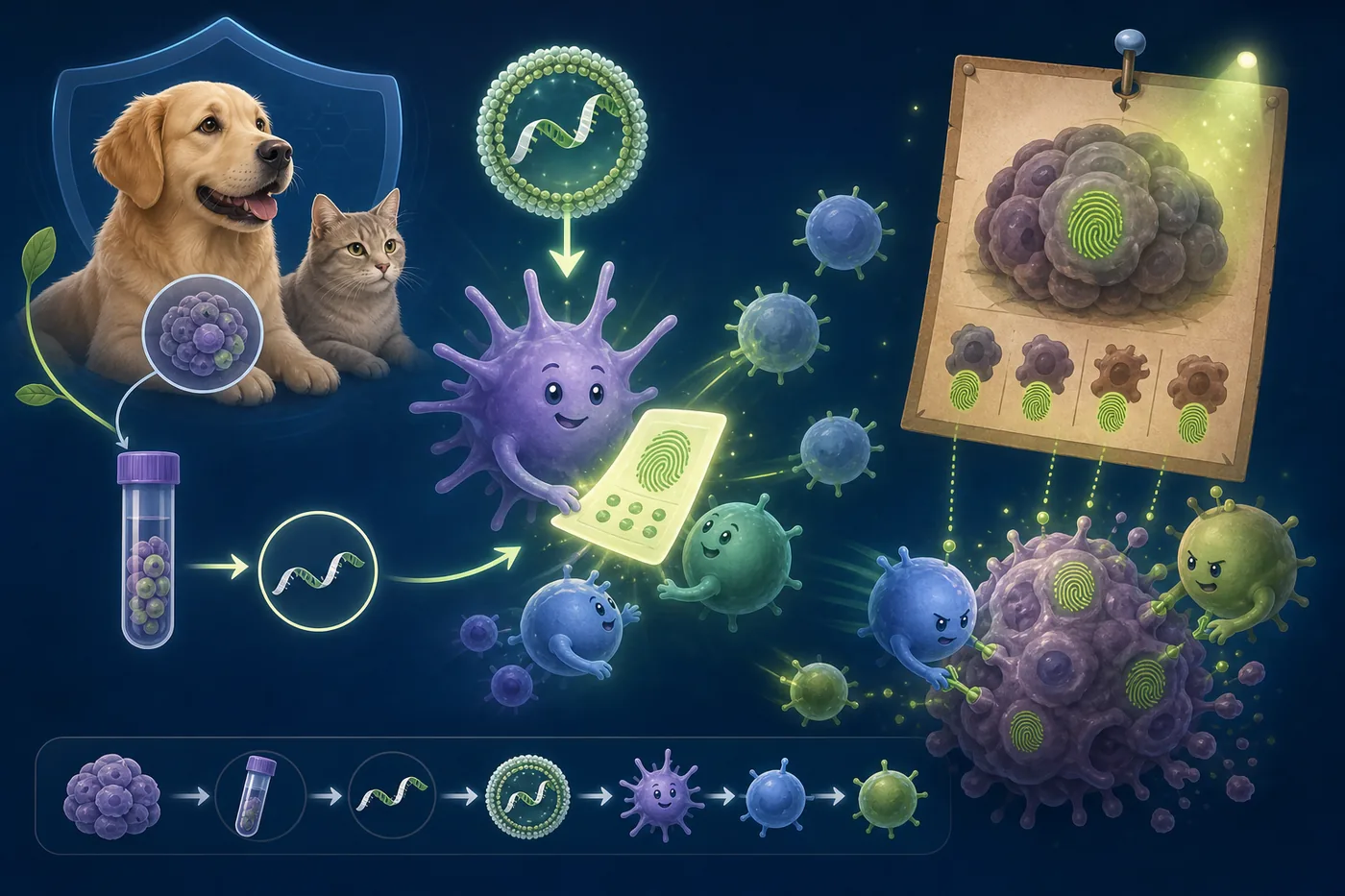 Immune·Teach · IIT Study
Canine Personalized mRNA Immunotherapy
Answers: what path remains when no drug fits
50G-deep RNA sequencing plus AI neoantigen analysis to build a custom mRNA-LNP formulation per dog — awakening the dog's own immune system.
Learn how to enrollMy pet has cancer — what should I do first?
Read first, then treat — a complete decision map from warning signs and diagnosis to sample types and route selection.
Research nature
The personalized canine mRNA immunotherapy is an investigator-initiated exploratory study (IIT) led by PETcura — an investigational novel medical technology, not a commercially approved veterinary product. Eligibility is assessed by licensed veterinarians; enrollment and efficacy are not guaranteed.
Pet Owner FAQ
Research nature
The personalized canine mRNA immunotherapy is an investigator-initiated exploratory study (IIT) led by PETcura — an investigational novel medical technology, not a commercially approved veterinary product. Eligibility is assessed by licensed veterinarians; enrollment and efficacy are not guaranteed.
What is a personalized canine mRNA vaccine, and is it available in China?
A personalized canine mRNA immunotherapy is an exploratory treatment research tailored to each dog's own tumor: 50G-deep RNA sequencing plus AI neoantigen analysis produce a custom mRNA-LNP formulation that trains the immune system to recognize that dog's unique tumor features. PETcura is running this IIT with limited recruitment across 9 cities and 12 partner hospitals in China. It is an investigator-initiated study, not a commercially approved product.
Why does fresh tumor tissue matter on surgery day?
RNA sequencing requires high-quality fresh tumor tissue — paraffin blocks or slides usually cannot substitute. Even before pathology results are ready, a properly frozen fresh-tissue sample preserves the future option to join the mRNA immunotherapy study or run drug sensitivity testing. Freezing is not a treatment decision today; it keeps options open for tomorrow.
What is the difference between drug sensitivity testing and gene testing?
3D organoid drug sensitivity testing grows tumor cells into an "avatar" and measures sensitivity to 48 chemo/targeted drugs, with a report in ~10 days — answering "which drug should we use". Canine tumor gene testing uses a 154-gene panel to profile mutations and amplifications, producing a targeted drug and treatment opportunity report — answering "what treatment directions exist". They address different decisions and complement each other.
How do I contact PETcura?
Add us on WeChat: petcura — pet owners may request an enrollment evaluation or ask about testing services; veterinarians, please note "doctor collaboration". You may also email petcura@imodels.tech.
How do sequencing, drug sensitivity testing, and mRNA immunotherapy relate to each other?
These three are not alternatives — they are three ways of "reading" the same patient's tumor: gene sequencing "reads" the molecular layer (mutation profile and targeted drug directions); drug sensitivity testing "tries" the cellular layer (which drugs actually work); personalized mRNA immunotherapy "teaches" the immune layer (a personalized path when no off-the-shelf drug fits). They answer different decision questions and complement each other — and one fresh tumor sample collected on surgery day can support multiple paths in parallel.
Why "read it first, then treat it"?
Tumors with the same pathology can have very different molecular profiles — two "lymphomas" can be driven by very different mutations. Traditional drug selection is largely trial-and-error: a regimen takes 1–2 months to evaluate while the tumor keeps growing. Reading the tumor's molecular features before choosing a treatment turns "trial" into "choice" — and keeps time on the side of the effective plan.