
Rosie's Story — How One Dog Validated the Direction of Personalized mRNA Immunotherapy
Rosie's Story: one dog, one direction
Diagnosed in 2024; surgery and chemotherapy failed; vets gave 1-6 months — in late 2025, this dog showed the world where personalized mRNA treatment can lead.
Act I: What happened
In 2024, a dog named Rosie in Australia was diagnosed with mast cell tumor. Surgery, chemotherapy — everything they tried, the tumor kept growing. Vets gave her 1–6 months.
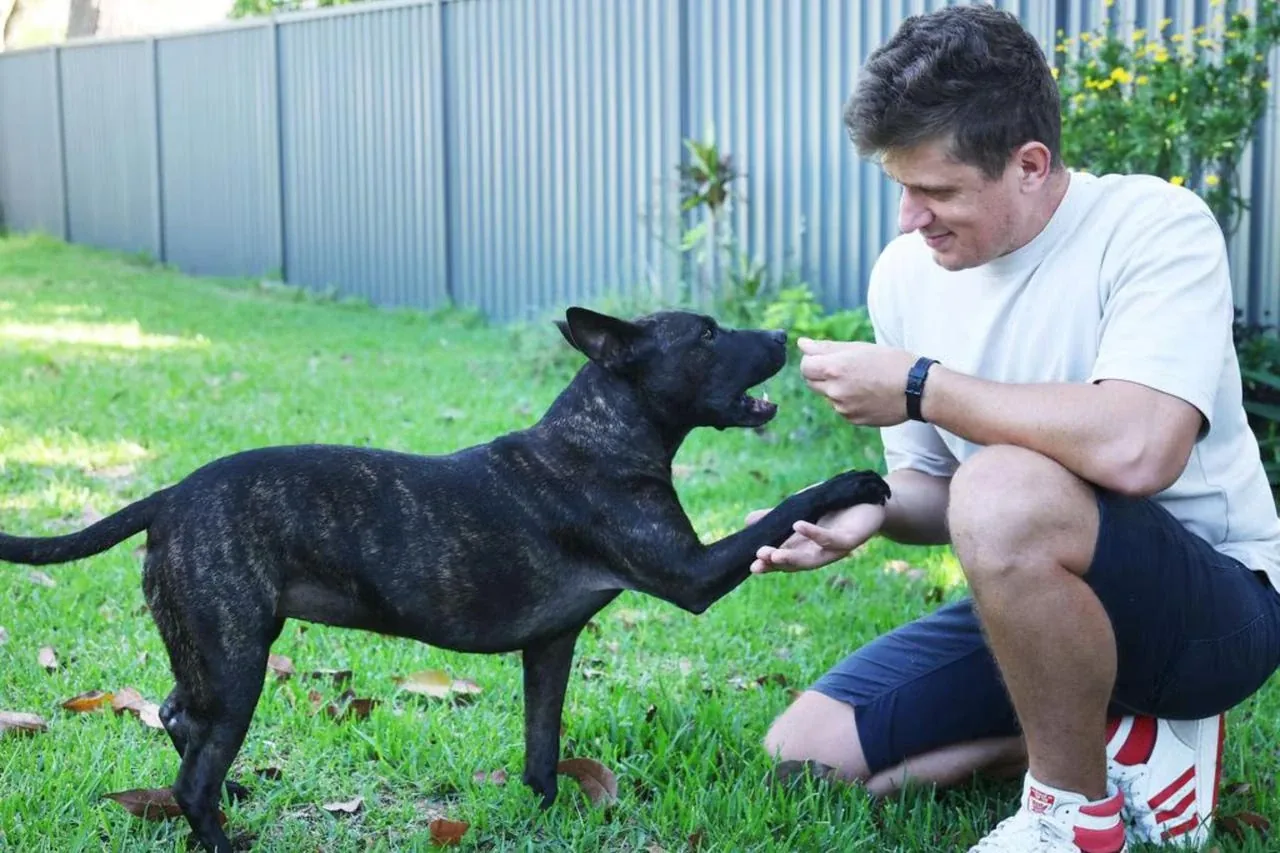
Paul is not a biologist. He has 17 years of machine learning and data experience — so he decided to try what he knew how to do: use AI tools (ChatGPT, AlphaFold and others) to map the mutations driving the tumor and design the blueprint of a personalized mRNA vaccine, then coordinate with researchers at the University of New South Wales (UNSW) — Associate Professor Martin Smith's Ramaciotti Centre for Genomics sequenced Rosie's normal and tumor DNA, and Professor Pall Thordarson's UNSW RNA Institute team designed and synthesized the vaccine (in under two months).
Ethics approval took three months and a 100-page application — Paul later said it was harder than designing the vaccine itself. In December 2025, Rosie received her first injection.
Within weeks, the tumors on Rosie's legs shrank significantly (overall 50–75%), and her mobility returned — the timeline she had been given was significantly extended.
Act II: Why this direction deserves to be taken seriously
The science already exists: genomic sequencing, protein modelling, mRNA synthesis — the tools are all there.
What Paul did for Rosie was not inventing new science — it was completing this path end-to-end for one dog for the first time: an owner without a biology background, supported by professional research institutions, could close the loop of "read the tumor → build the vaccine → immune response".
This should not belong to one person. In 2026, Gamgee, founded on Rosie's story, raised investment including Y Combinator and became a company, now running formal clinical trials in Australia — one dog's story eventually became a company.
This direction is being taken seriously.
Act III: Where we are right now
PETcura brings the same technology to China: the canine personalized mRNA immunotherapy IIT — recruiting at 12 partner hospitals in 9 cities, led and assessed by licensed veterinarians: enrollment requires pathology confirmation, physical assessment, LNP tolerance evaluation, and informed consent, with monitoring and follow-up throughout; every sequenced case receives a targeted drug guidance report as a guaranteed deliverable, even when no neoantigens are found.
Want more dogs to have this chance?
The PETcura IIT study is recruiting on a limited basis — add us on WeChat petcura with pathology/imaging, expected surgery date, and your city; the team matches a partner hospital and your veterinarian assesses eligibility.
Fact-check: a few things that must be said clearly
- A single case, not a general result: Rosie also received an immune checkpoint inhibitor (combination therapy, no control group) — the improvement cannot be attributed to the vaccine alone
- AI was the assistant; professional teams did the work: sequencing by the UNSW genomics team, mRNA design and synthesis by the UNSW RNA Institute on an ISO 9001-certified platform; Paul used AI to assist mutation analysis and target shortlisting
- Not cured: the UNSW report's own words — "she has not been 'cured', but she has gained more time"; some tumors did not respond, and Paul is designing a second-generation vaccine
How this differs from the structured IIT in China
Rosie's case was an owner-organized, AI-assisted bespoke attempt. PETcura runs a rigorous IIT led and assessed by licensed veterinarians: pathology confirmation, health/blood assessment, LNP tolerance screening, informed consent, systematic safety monitoring, and a targeted drug guidance report delivered to every sequenced case regardless of outcome. → Study details & eligibility
Primary source: UNSW Newsroom, "Meet the man who designed a cancer vaccine for his dog" (March 17, 2026, unsw.edu.au/newsroom); photo: Paul Conyngham with Rosie (Photo: John Feder).
Learn more: Study details & eligibility · Owner FAQ · Participating cities