Canine Tumor Gene Testing — 154-Gene Panel & Targeted Drug Guidance
A 154-gene panel that reads the tumor's molecular features — read the lock before forging the key. Paraffin blocks accepted, coming soon.
The same pathology can hide very different molecular features. Gene sequencing adds a critical decision dimension for recurrent, metastatic, refractory, or limited-option cases.
What this service does
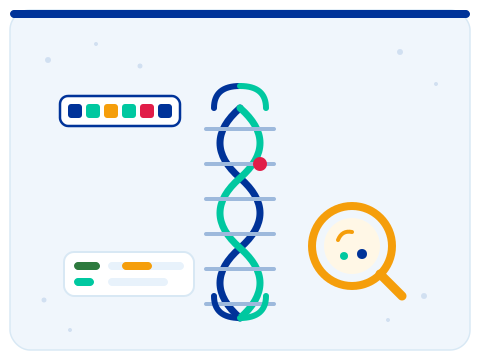
Targeted drugs only work against specific mutations. Sequencing reads the tumor's "molecular fingerprint" first — which mutations exist, which drug directions they point to, and how strong the evidence is — turning drug choice from guessing into evidence.
- 154-gene panel: key oncogenic pathways including RTK, MAPK, PI3K/AKT/mTOR
- Paraffin blocks accepted: the "second life" path for dogs that already had surgery
- A–D evidence tiers: every direction comes with its credibility rating
Why gene testing (Why)
From guessing to evidence
Targeted drugs work against specific mutations — sequencing looks at the lock before choosing the key, so drug choices are backed by molecules, not trial by trial
The second life of the paraffin block
For dogs that already had surgery, the block confirms "what cancer it is" — and DNA testing can still unlock molecular treatment clues from it
A new dimension when treatment stalls
When standard options are limited or responses are poor, molecular information helps the veterinarian see "what other directions exist"
Validated by real-world data
Published real-world studies in canine hemangiosarcoma and beyond show survival benefits of targeted therapy after surgery
Guessing vs. evidence: read the lock, then forge the key
Targeted drugs only work against specific mutations — and only some tumors carry them. Sequencing answers first: "what does this lock look like?"
Treating without sequencing
- One regimen takes 1–2 months to evaluate — if it fails, wait 1–2 months more
- Meanwhile the tumor keeps growing
- Side effects may be suffered for nothing; time may be wasted
Read the lock, then forge the key
- Sequencing reveals mutations and targets — drug choices have molecular support
- A–D evidence tiers tell you "how trustworthy this direction is"
- "No matching drug" is itself a valuable answer — avoid futile attempts
Human oncology already demonstrates how molecular testing changes drug selection: after EGFR-targeted drug resistance, patients with the T790M mutation who switched to a third-generation drug had a 61% benefit rate, versus only 21% for T790M-negative patients (AURA3 trial; human lung-cancer data, for illustration only; see the handbook reference list).
Real-world evidence: targeted therapy value in canine tumors is published
- A real-world study of 508 dogs with hemangiosarcoma: dogs receiving targeted therapy (small-molecule inhibitors) after surgery had a median survival of 149 days, versus 81 days for surgery alone; 211 days with targeted therapy plus chemotherapy (Scientific Reports, 2025)
- A real-world analysis of 2,119 dogs: several human-designed targeted drugs were associated with positive outcomes in canine tumors carrying specific genomic alterations; prognostic genes including TP53, PIK3CA, NRAS, ATM, and KIT showed strong human–canine concordance (npj Precision Oncology, 2023)
- Canine oncology started late — it should not stay in the guessing era: in human oncology, targeted drugs are now routine across most major cancer types. The canine arsenal is younger and smaller, but sequencing can find out "which directions exist" first — then decide which drug fits
How it works
The principle in one sentence: key and lock
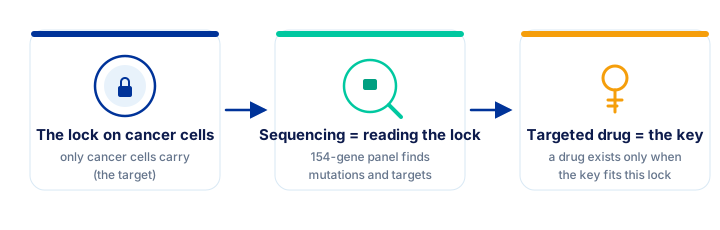
A target is a feature that cancer cells have and healthy cells do not — like a lock only cancer cells carry. A targeted drug is the key that fits that lock; sequencing is looking at the lock before forging the key.
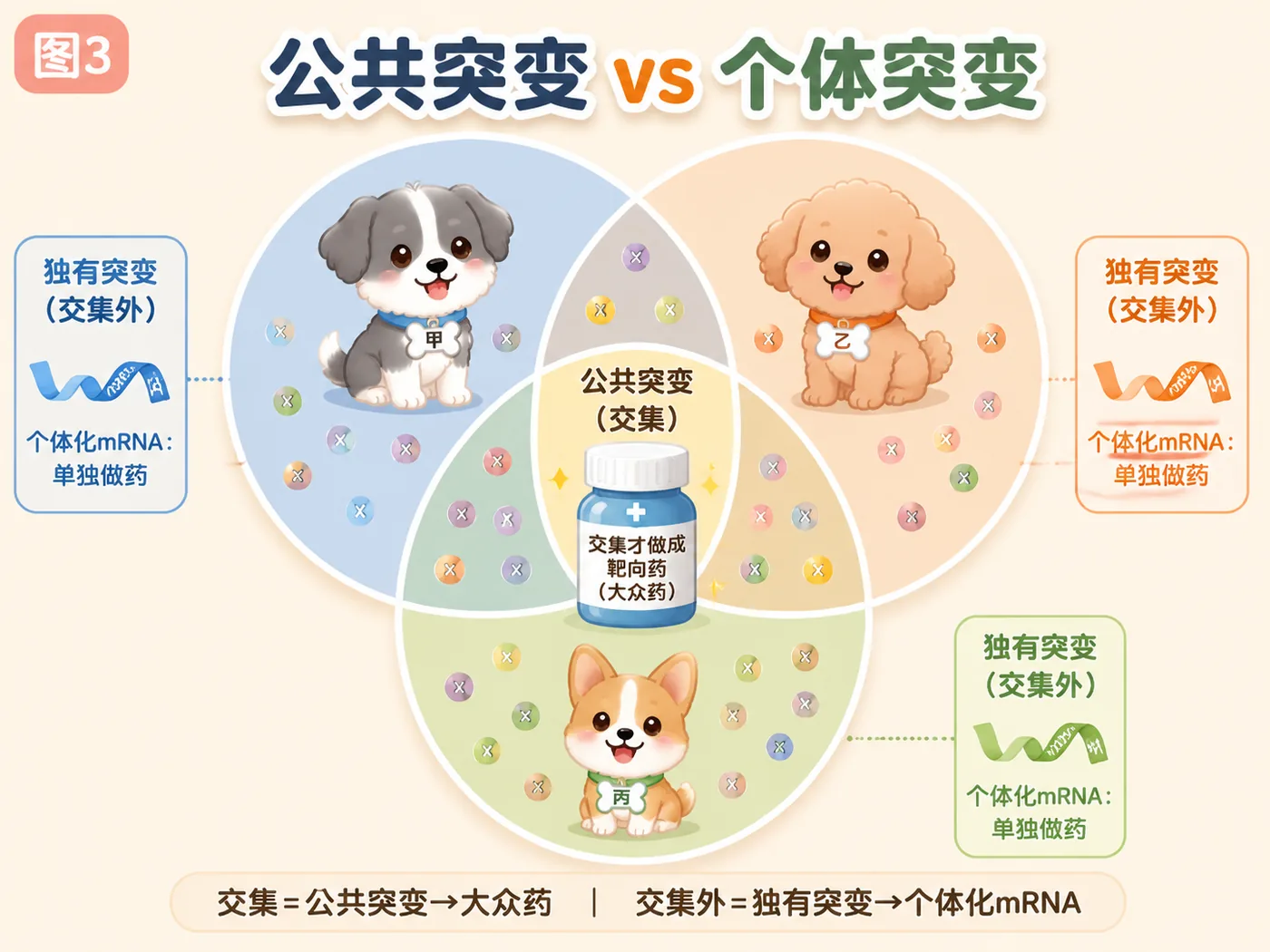
Why doesn't every dog have a key? Developing a new drug costs enormous time and money, so manufacturers only build drugs for mutations shared by many patients (for example, KIT mutations common in canine mast cell tumors). Individual mutations vary endlessly — population-level drugs were never designed to cover every tumor. That is exactly why you sequence first: to learn whether this dog's tumor carries a lock with a key.
From "typo" to drug direction: one pathway
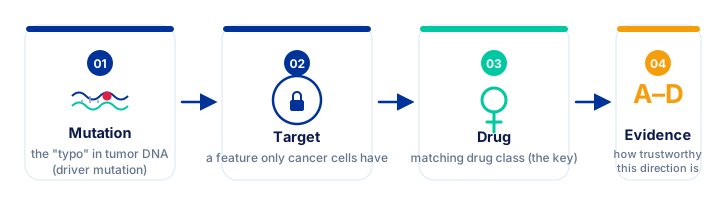
- Mutation: the tumor's DNA contains a "typo" (driver mutation)
- Target: the typo makes cancer cells display a unique feature (target) healthy cells lack
- Drug: some targets have matching targeted drug classes (keys); some have none
- Evidence: A–D tiers describe how trustworthy this direction is
What is tested (154-gene panel)
154 canine cancer-related genes (SNV/Indel, copy-number variation, amplification, gene fusion), covering key oncogenic pathways: RTK, MAPK, PI3K/AKT/mTOR, DNA damage repair, cell cycle, and more. Evidence is tiered A–D (strong canine evidence, 16 genes → moderate canine, 27 → comparative oncology, 95 → exploratory, 16).
Design is not one-size-fits-all — detection regions are matched to gene function and mutation mechanism:
| Strategy | Genes | Coverage |
|---|---|---|
| Hotspot / key exons | 45 genes | Known hotspot mutations and key exons (SNV/Indel) |
| Full coding (tumor suppressors) | 34 genes | Full coding region or + CNV |
| Amplification + key exons | 21 genes | Gains and key exons |
| DNA repair pathway | 19 genes | Full coding of DDR/HRR genes |
| Gene fusions | 6 genes | RNA-level supplemental confirmation (ALK, RET, ROS1, etc.) |
A–D evidence tiers at a glance
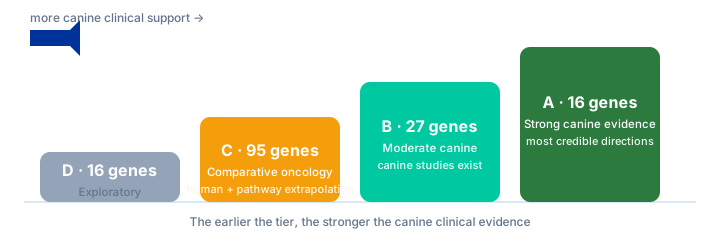
Strong canine evidence
The most credible drug directions in canine oncology
Moderate canine evidence
Canine studies exist; evidence still accumulating
Comparative oncology
Extrapolated from human tumors and pathways — auxiliary
Exploratory evidence
Frontier directions, limited reference value
The earlier the tier, the stronger the canine clinical support. Human data is auxiliary only — it does not equal a canine-approved indication, and no drug is guaranteed to work.
Four simple steps: from sample to drug discussion
Sample
Fresh tumor tissue on surgery day, or an existing paraffin block/slide
Sequence
154-gene panel with QC, then mutation and amplification analysis
Report
A–D tiered targeted drug direction report
Discuss
Your veterinarian integrates pathology, staging, and clinical judgment
Cancer × Gene × Drug reference
Different cancer types carry different driver mutations and point toward different drug directions — glance at this map before sequencing:
| Cancer type | Common genes | Drug direction | Evidence tier |
|---|---|---|---|
| Mast cell tumor | c-KIT | KIT inhibitor class | A (strong canine) |
| GIST | c-Kit (confirm by IHC) | Targeted drug class | A–B |
| Transitional cell carcinoma (TCC) | BRAF | BRAF inhibitor class | B–C |
| Hemangiosarcoma | TP53, PIK3CA | Pathway direction (e.g., mTOR) | C (comparative) |
This reference shows directions only — actual drug use is decided by the veterinarian with evidence tier, pathology, and clinical judgment. Drugs are category illustrations, not prescriptions. More cancer types and interpretation: Cancer × Gene × Drug Reference Guide.
What the report contains
A professional report presents not just "what was found" but "how strong the evidence is":
Sample quality
Tumor content, coverage, and analysis adequacy
Key variants
Gene, variant type, functional impact, evidence tier
Diagnostic association
Molecular evidence relevant to the tumor type
Prognostic information
Markers possibly related to progression or outcome
Treatment direction
Potential drug classes, pathways, evidence sources
Limitations
Scope, uncertainty, and clinical integration advice
Sequencing is not only about targeted drugs
Molecular information supports other treatment decisions too:
- Immunotherapy clues: sequencing findings can inform immunotherapy choices — this is also where the personalized mRNA immunotherapy IIT begins (≥50G deep RNA-seq plus AI neoantigen analysis, learn about mRNA immunotherapy)
- Complementary to drug sensitivity testing: sensitivity testing "tries" the cellular layer — sequencing says "possible", sensitivity testing measures "effective" (learn about drug sensitivity testing)
Case study: proven practice in international markets

Tumor gene testing with targeted drug guidance is already a mature service in international veterinary medicine:
- FidoCure (USA): provides targeted drug matching recommendations to veterinarians based on an evidence-based literature system, serving hundreds of US veterinary hospitals
- Vidium SearchLight DNA (USA): a 120-gene canine tumor panel offering diagnostic, prognostic, and therapeutic target information
- Oncept (USA): the world's first approved canine therapeutic vaccine — the direction "tumor genes → personalized treatment" is validated globally
These services have made "reading tumors at the molecular level" routine for veterinarians in developed markets — but cross-border sample shipping, English-only reports, and limited local veterinary support remain real barriers for pet owners. PETcura brings the same class of service to China: a 154-gene panel, Chinese-language reports, local veterinarian support, no cross-border shipping — accessible precision medicine for Chinese pet families. Proven globally, coming to China soon.
How to participate
Already had surgery and only have a paraffin block? The block confirms "what cancer it is" — and DNA testing can still unlock molecular treatment clues from it. Missing the fresh-tissue window on surgery day does not mean there is no path forward.
The service is coming soon — reserve a notification
Add us on WeChat: petcura to reserve a launch notification — we will let you know as soon as the service goes live. Existing blocks can be submitted directly at that time.
Veterinarians: after launch, submit cases via "case assessment → sample preparation → lab testing → report interpretation"; reports support veterinary judgment alongside pathology, staging, and clinical status. → Contact us
FAQ
Sample preparation, report reading, evidence tiers? → Sequencing FAQ
Learn more: Cancer × Gene × Drug Reference Guide · Drug sensitivity testing · mRNA immunotherapy IIT · Sequencing FAQ · Contact